Closing a Gap Between the Front Teeth Without Veneers: A Kharghar Case Study
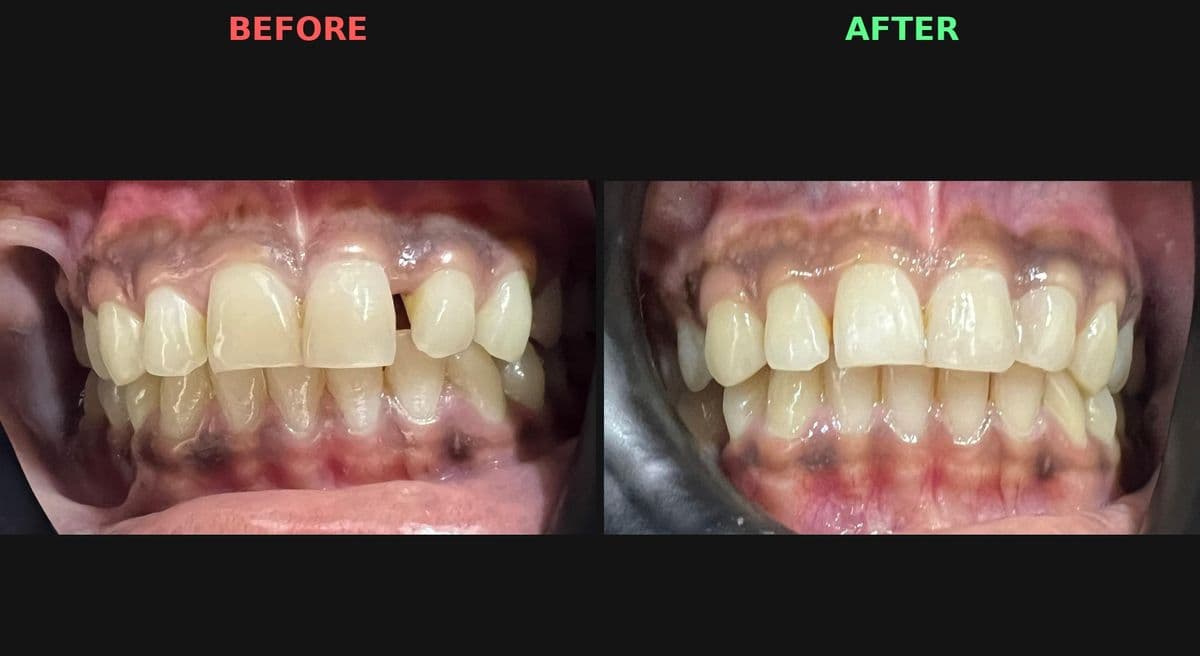
A gap between the front teeth is one of those things patients notice in every photo but aren't always sure how to fix. This is a real case from Reform Dental Clinic in Sector 15, Kharghar. The patient came in with a visible gap between the upper left central incisor and the lateral incisor next to it, and one clear preference: no veneers. Here's what was done instead, with the actual before and after photos.
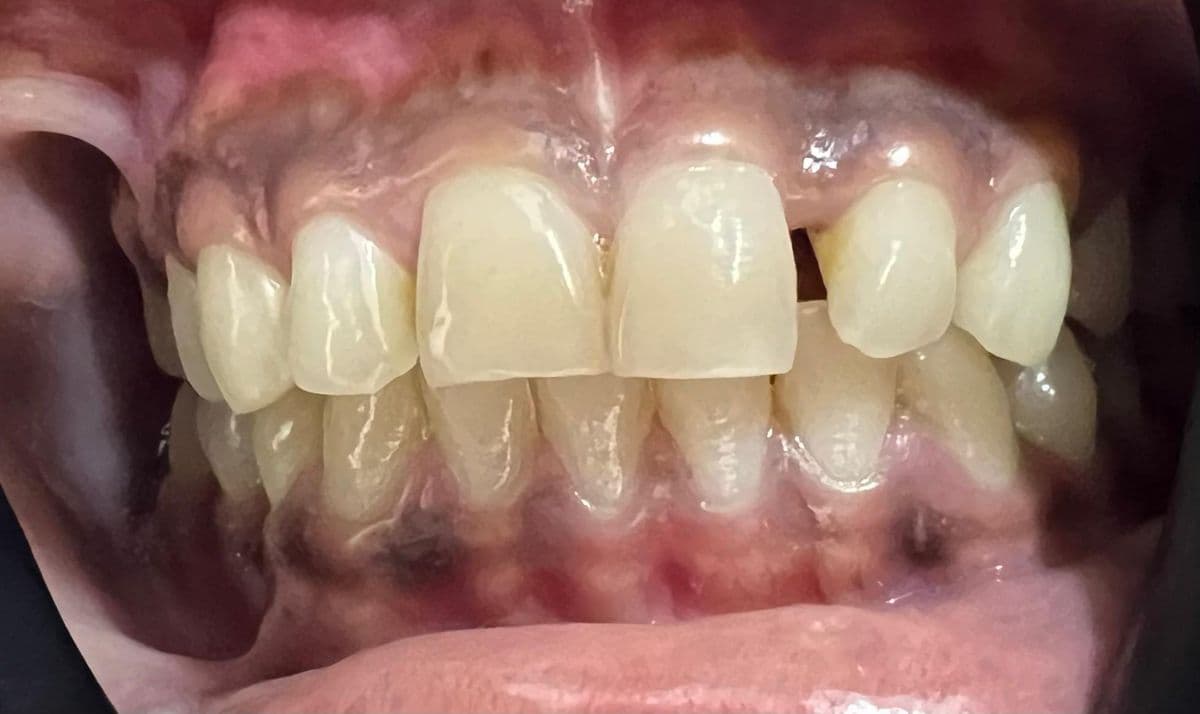
The Problem: A Gap Between the Upper Left Central and Lateral Incisor
This kind of gap is called a diastema, and it's more common than people think, especially between the upper front teeth. It doesn't usually cause pain or affect chewing, but it's often the first thing a patient wants addressed because it shows every time they smile or speak. The photo below is from the first visit, showing the gap between the two teeth clearly.
Why the Patient Chose Bonding Over Veneers
Veneers are a legitimate way to close a gap like this, but they involve preparing a thin layer of the tooth surface and committing to a porcelain shell that will eventually need replacing. This patient didn't want that, and said so plainly at the consultation. For a single, well-defined gap with otherwise healthy teeth, that's a reasonable position, not a compromise. As we cover in more general terms on our smile designing page, bonding is the more conservative option of the two: it doesn't require cutting into the tooth, it's done in a single sitting, and it can be adjusted or redone later without having lost any original tooth structure along the way. Dr. Shipra Mandwar talked through both routes honestly rather than steering the patient toward the higher-value treatment, and bonding was planned.
The Procedure: Direct Composite Restoration
Composite bonding for a gap like this is done directly in the mouth, in one visit, without any lab work or temporary restoration in between. A tooth-coloured composite resin is built up on the edges of the central and lateral incisor facing the gap, shaped by hand to close the space and match the curve of the surrounding teeth, then hardened with a curing light. The material is polished to match the natural shine of the enamel around it, so the repair blends in rather than standing out as an obvious addition. No anaesthesia is usually needed for this kind of bonding, since it doesn't involve touching the nerve or cutting into healthy tooth structure.
The Result
The gap was closed in the same visit, with the composite shaped and polished to sit naturally alongside the patient's own teeth. The photo below shows the same teeth immediately after bonding.
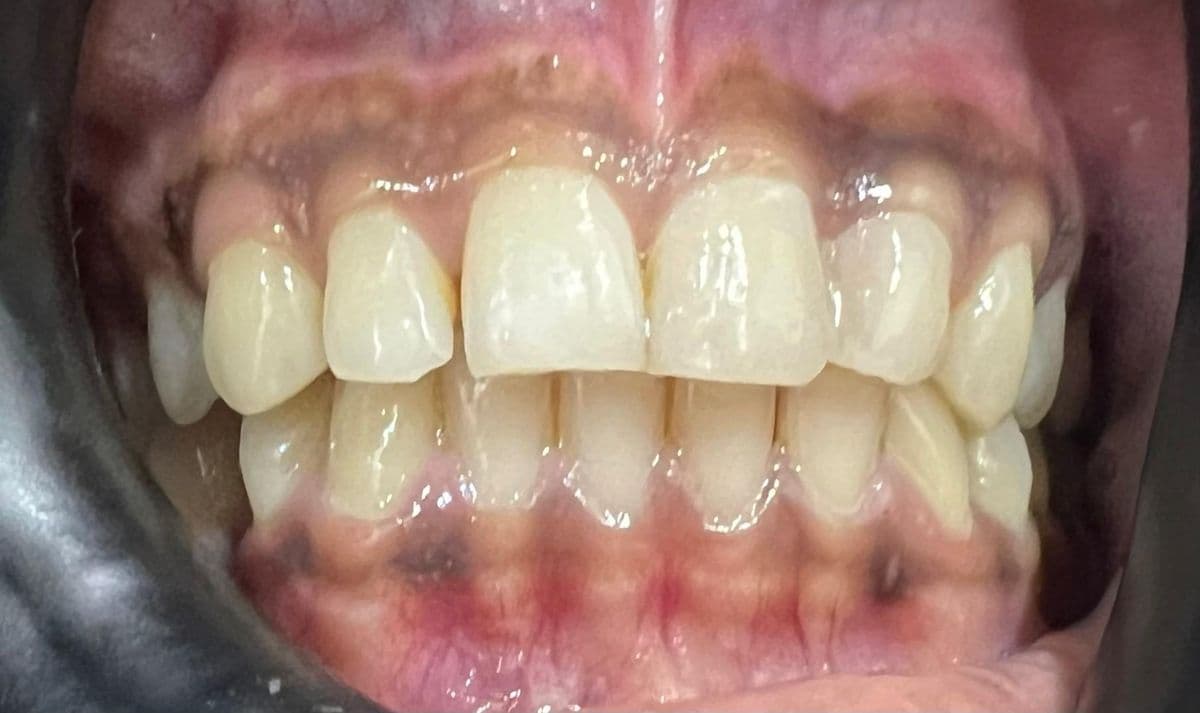
Seen side by side, the change is a closed gap and a more even smile line, without any of the teeth being cut down or capped. The patient was able to see the shape and finish before leaving the chair, and small adjustments to the contour were made on the spot until it sat comfortably against the lip and matched the wear pattern of the neighbouring teeth.
Is Composite Bonding Right for Every Gap?
Not always, which is exactly why this is a decision made at a consultation rather than assumed from a photo. Bonding works best on a single, well-defined gap like this one, where the surrounding teeth are healthy and the space is modest. A wider gap, gaps spread across several teeth, or a gap that's really being caused by a bite or spacing issue further back in the mouth may need a different plan, sometimes orthodontic movement first, sometimes veneers if the patient wants a more dramatic reshaping of the tooth alongside the gap closure. Dr. Shipra Mandwar will say plainly if bonding isn't the best fit for a particular case rather than fitting the treatment to the tooth regardless.
What It Costs Compared to Veneers
Cost is usually the second question after "will it look natural," and it's a fair one. Composite bonding for a single gap like this costs meaningfully less than a porcelain veneer, since there's no lab fabrication and no preparation of the tooth involved, and it's typically finished in one appointment rather than two or three. That doesn't make it the automatically cheaper choice over time; a veneer generally lasts longer before it needs attention, so the comparison depends on how many years you're weighing it over, not just the bill on the day. At Reform Dental Clinic, both options are quoted clearly at the consultation so the patient can weigh the two honestly rather than picking blind.
What This Case Shows
Not every gap needs a veneer to fix it. A single, well-defined diastema between two front teeth can often be closed with direct composite bonding in one visit, at a lower cost and without touching healthy tooth structure. That said, bonding suits some cases better than others; a wider gap, a bite issue, or gaps across several teeth may call for a different plan, which is why this is decided at a consultation rather than assumed from a photo. If you'd like to understand how bonding compares with the other option in more general terms, veneers vs teeth whitening in Kharghar is a useful starting point, and our smile designing page covers where bonding fits alongside veneers, whitening, and contouring.
Composite bonding does need some care to last well: it can stain over time with tea, coffee, or tobacco, and it's not as chip-resistant as a natural tooth or a porcelain veneer, so avoid using your front teeth to bite into hard foods or open packaging. With reasonable care, a well-placed bonding like this can hold up for several years before it needs a touch-up.
If you have a gap between your teeth and would rather not go straight to veneers, message Reform Dental Clinic on WhatsApp and Dr. Shipra Mandwar will tell you honestly whether bonding is the right fit for your case. You'll find us at Shop No. 10, Tricity Eros, Behind D Mart, Sector 15, Kharghar, Panvel, Maharashtra 410210, open Monday to Saturday, 10am to 9pm.
Frequently Asked Questions
What is a diastema?
A diastema is the dental term for a gap between two teeth, most commonly seen between the upper front central incisors or, as in this case, between a central and lateral incisor. It's a cosmetic concern in most cases and doesn't usually affect chewing or health.
Can a gap between the front teeth be closed without veneers?
Yes, for a single, well-defined gap with otherwise healthy teeth, direct composite bonding is often a suitable alternative. It closes the gap by adding tooth-coloured material to the edges of the teeth, without preparing or cutting down the tooth surface the way a veneer does.
How long does composite bonding take to close a gap?
In this case, the bonding was done and finished in a single visit, with no lab work or temporary restoration needed in between.
Is composite bonding permanent?
It's a long-lasting but not permanent fix. With reasonable care, a well-placed bonding can hold up for several years before it needs polishing or a touch-up. It doesn't wear as long as a porcelain veneer, but it also doesn't involve removing any healthy tooth structure.
Does composite bonding stain like natural teeth?
It can pick up staining over time from tea, coffee, or tobacco, a little more readily than natural enamel. Avoiding these where possible and keeping up routine cleaning helps it stay looking fresh for longer.
Where can I get a gap between my teeth assessed near Sector 15, Kharghar?
Reform Dental Clinic is at Shop No. 10, Tricity Eros, Behind D Mart, Sector 15, Kharghar, Panvel 410210. Dr. Shipra Mandwar will assess whether bonding or another option suits your gap and explain the plan honestly. Message us on WhatsApp to book.
Ready to transform your smile?
Book an appointment at Reform Dental Clinic, Sector 15 Kharghar.