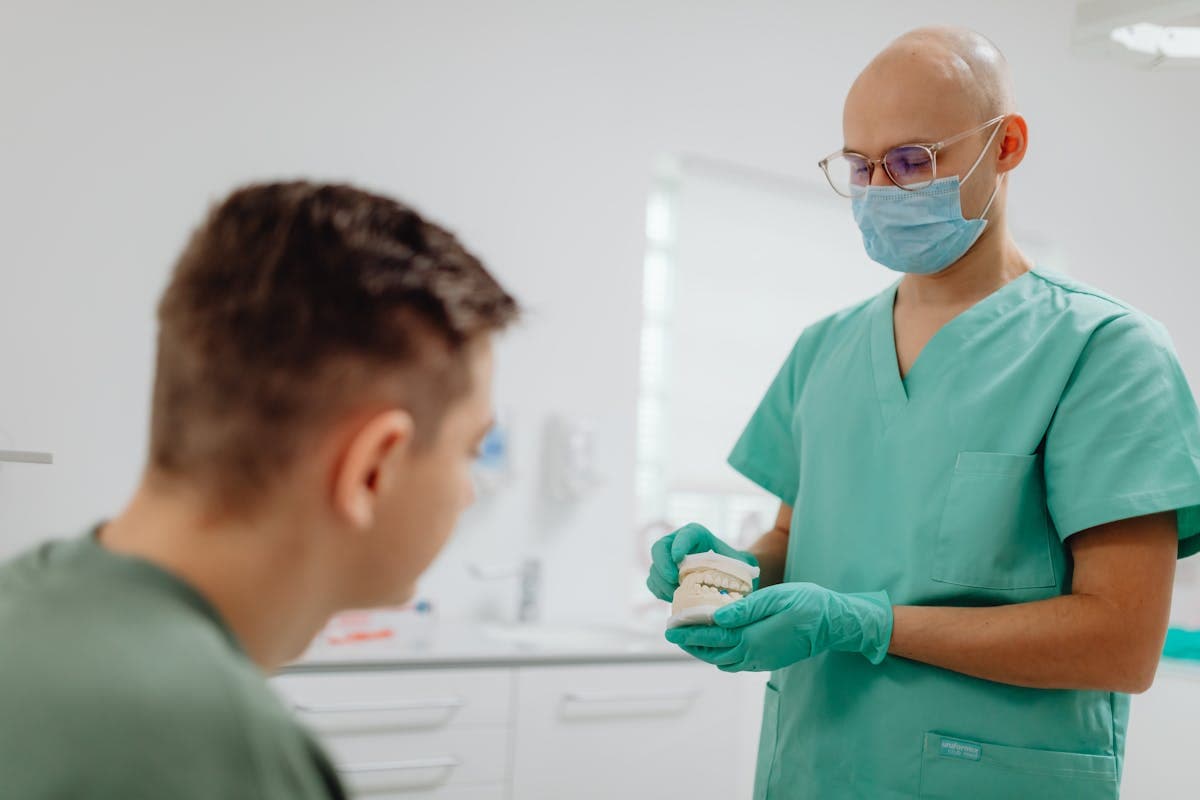
A root canal saves a tooth that's infected or badly decayed by cleaning out the soft tissue inside it, then sealing it so it stops hurting and stays in your mouth. If a back tooth in Kharghar has been throbbing or flaring up with hot and cold, this is usually the treatment that ends it. At Reform Dental Clinic in Sector 15, Kharghar, Navi Mumbai, Dr. Shipra Mandwar (BDS, MDS) does this at a calm, unhurried pace.
Most people dread the words 'root canal' because of stories from decades ago. Modern dentistry has moved on. With proper numbing and rotary tools, the visit feels much like having a filling — and the relief afterwards is the part people actually remember. Here's what's involved, what it costs, and when your tooth might not need one at all.
Signs You Might Need a Root Canal
Not every twinge means a root canal, but some signs point that way. The classic one is a deep ache that lingers long after a hot or cold drink, rather than a quick flicker that fades. Watch for these:
- A toothache that keeps you up at night or returns in waves
- Sharp pain when you bite down on one tooth
- Lingering sensitivity to hot or cold long after the drink is gone
- A small bump on the gum, swelling, or a tooth that's darkened
Is a Gentle Root Canal Really Possible?
Yes — and the fear usually comes from the infection, not the treatment. Before anything starts, the area around your tooth is fully numbed, so most people feel pressure at most. At our Kharghar clinic, Dr. Shipra checks in with you throughout and pauses the moment you raise a hand. The dull, constant ache you walked in with is exactly what the procedure clears. Your dentist won't judge how long you've put it off, either.
Can It Be Done in a Single Sitting?
Often, yes. A single-sitting root canal works for many straightforward teeth, especially at the front, where there's one canal to clean and seal. Back molars with three or four canals, or a tooth with active infection, may be safer over two visits so everything settles properly. After an X-ray, we'll tell you honestly which your tooth needs — you won't be booked for extra appointments you don't require.
What Happens During Treatment
First, an X-ray maps the roots and the area is numbed until you feel nothing sharp. Next, the infected tissue inside the tooth is gently removed and the canals are cleaned and shaped — this is the step that eases the pain you've been carrying. Finally, the tooth is sealed, and a crown is usually fitted later to protect it so it can handle everyday chewing for years.
Through most of it you'll feel pressure and a bit of vibration, much like a long filling, rather than pain. A small sheet called a rubber dam keeps the tooth clean and dry while we work, which also keeps the taste of anything out of your mouth. Most appointments run under an hour, and you're free to head home straight afterwards — many of our Kharghar patients go back to work the same day.
When a Root Canal Isn't the Answer
Sometimes that nagging tooth just needs a filling, a deep clean, or treatment for a gum problem — not a root canal. A brief twinge that fades quickly may settle with a check-up alone. And if a tooth is cracked too far down to save, an extraction followed later by a dental implant can be the more sensible long-term plan. An honest diagnosis comes first; if you don't need the procedure, Dr. Shipra will be the one to tell you.
It also matters not to leave it too long. A tooth that needs treatment today is usually simpler to save than the same tooth in three months, once infection has spread further into the bone. Waiting rarely makes the problem smaller or easier to treat — it tends to do the opposite. If you're unsure, a quick check-up at our Sector 15 Kharghar clinic settles the question before things get worse.
What Root Canal Treatment Costs in Kharghar
Cost depends on the tooth, how many canals it has, and whether you need a crown afterwards — a single-canal front tooth is simpler than a four-canal molar. Rather than guess, we share a clear, itemised estimate before any work starts at Reform Dental Clinic. If money is tight, just ask; there's usually a way to make it manageable.
Frequently Asked Questions
The tooth and gum are fully numbed with local anaesthetic, so most people compare it to having a filling. Any mild soreness afterwards usually fades within a few days and responds well to simple pain relief.
Many are finished in one or two visits, depending on the tooth and whether there's infection. Front teeth are often quicker than back molars. After an X-ray at our Kharghar clinic, you'll get a clear plan.
Most people feel much better within two to five days. Stick to soft foods like khichdi, dal, yoghurt, and scrambled eggs at first, avoid very hot, cold, or hard foods until the soreness settles, and chew on the other side until your crown is fitted.
Usually, yes — especially for back teeth that take heavy chewing. A treated tooth can turn brittle over time, and a crown protects it from cracking. Your dentist will advise whether your specific tooth needs one.
Where a tooth can be saved, keeping your natural tooth is usually the better long-term choice; an extraction leaves a gap that can shift nearby teeth. If a tooth truly can't be saved, a dental implant can fill the space later. Dr. Shipra will talk you through both.
Reform Dental Clinic is at Shop No. 10, Tricity Eros, Behind D Mart, Sector 15, Kharghar, Panvel 410210. For severe pain, message us on WhatsApp and we'll do everything we can to see you quickly.
Related Reading
Tooth keeping you up at night?
Don't wait for it to settle on its own — it rarely does. Message Reform Dental Clinic on WhatsApp and Dr. Shipra Mandwar will see you as soon as possible. Find us at Shop No. 10, Tricity Eros, Behind D Mart, Sector 15, Kharghar, Panvel, Maharashtra 410210. Open Monday to Saturday, 10am–9pm.